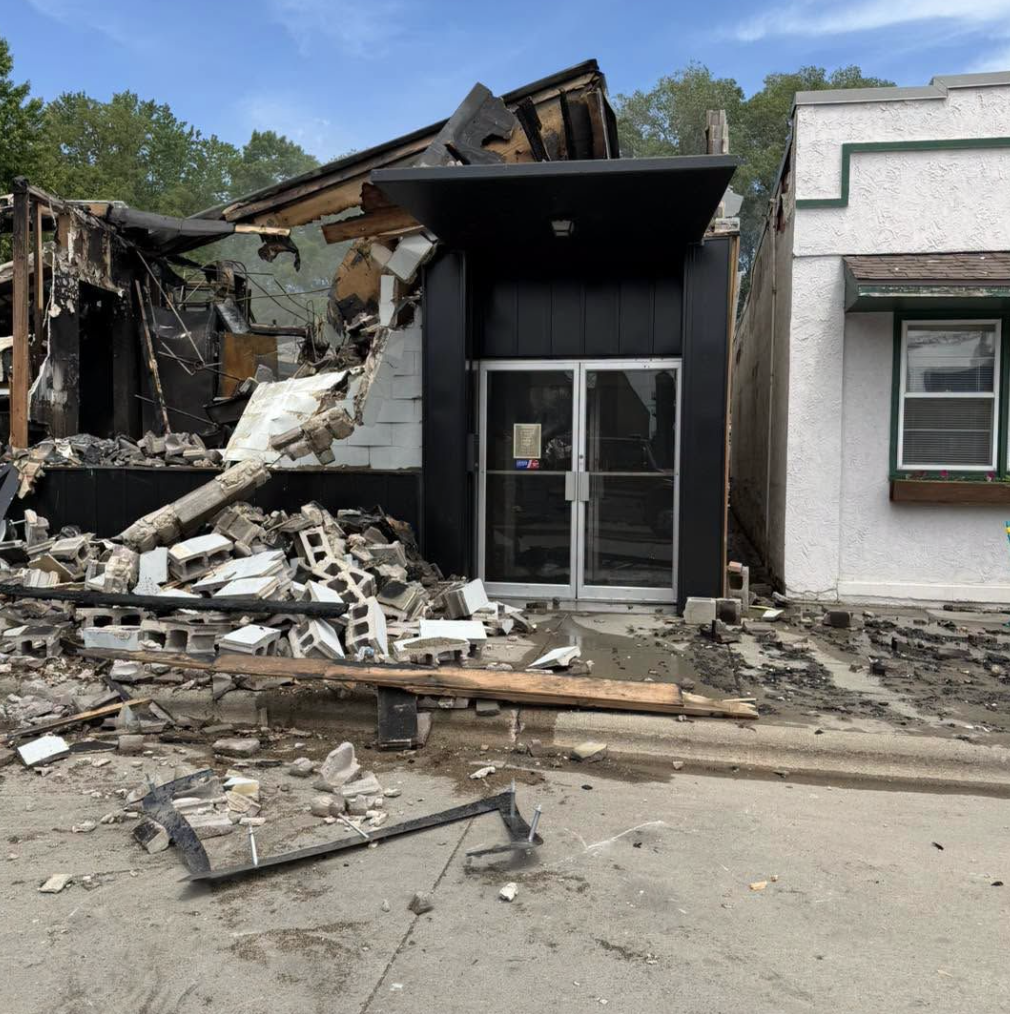

Coverage and Community Gave Hope
On June 4, 2026, Pinz Bowling Center in Dell Rapids, South Dakota, was destroyed by an accidental electrical fire. In a matter of hours, owner Casey McCoy was left to face a devastating question: What happens after nearly everything you have built disappears overnight?
The timing was almost as shocking as the loss.
The check for a new insurance policy had cleared McCoy’s bank just days before the fire. Thankfully, it provided substantially better coverage than the policy he inherited when buying Pinz in 2022, while costing approximately $1,400 less per month.
“I wouldn’t have even a fraction of the options and opportunities that I have right now with my previous coverage,” he says.
AN UNLIKELY BEGINNING
McCoy had moved to the area a short time before the opportunity to buy Pinz came along. As a culinary-trained chef, he had helped open 15 restaurants but had no experience in bowling or entertainment.
The business combined a restaurant, catering operation, and eight bowling lanes, all inside a building that dated to 1965. While it was the food side that convinced McCoy to take the leap, once he was in, bowling became the part of the business that surprised him most.
McCoy came to see the center as a place where the community could gather, celebrate, and look after one another. He built Pinz around that broader experience.
SELLING THE WHOLE EXPERIENCE
Before the fire, Pinz offered leagues three nights a week and a Saturday youth program, along with a 37-seat restaurant, bar, catering, video lottery, and an expanded arcade. McCoy leaned heavily on his culinary background, preparing approximately 80% of the food in-house and changing the menu regularly based on the season, food costs and what guests wanted. He also invested approximately $200,000 in arcade games, including a $20,000 Halo game delivered just one week before the fire.
The changes helped increase annual sales by approximately 120% compared with the previous operation’s best year. But McCoy measured Pinz’s success by more than revenue. As the business grew, so did its role in the community.
A PLACE THAT SHOWED UP
McCoy wanted Pinz to be more than a place people visited. He looked for ways the center could support Dell Rapids, especially when someone in the community needed help.
When a December snowstorm closed schools just before the holiday break, McCoy prepared boxed meals for children who depended on school lunches. He left them near the back door and turned off the cameras so families wouldn’t feel self-conscious. Other businesses and residents began contributing, allowing Pinz to provide additional meals and later host a free spaghetti dinner that fed hundreds.
For McCoy, supporting the community also meant creating a place where people felt included, something especially close to his heart. He made a point of hiring Special Olympics participants, helping them build workplace skills and feel like part of the team. When one employee explained that the noise, lights, and crowds of a traditional high school prom were overwhelming, Pinz created a sensory-friendly celebration with quieter music, softer lighting, and its own grand march. What began as a way to make sure everyone could share the milestone became an annual tradition.
That same commitment to the community could be seen in the Bowling for Zander Scholarship Tournament, held in memory of local youth bowler Zander Heathcote, who died in a bicycle accident in 2022. Over four events, the tournament awarded more than $60,000 in scholarships.
McCoy’s involvement throughout Dell Rapids earned him the community’s 2024 Citizen of the Year honor and his own Casey McCoy Day. In 2025, he received Dell Rapids’ Spirit Award. He had arrived in Dell Rapids as an outsider, but he and Pinz became part of the town’s fabric.
Along the way, he was building a different kind of insurance policy: a community that would stand behind him when he needed it most. The other policy, the one that could make rebuilding possible, was a commercial policy he had nearly put off changing.
THE POLICY HE INHERITED
When McCoy bought the business, he simply continued the previous owner’s insurance policy. Its premium eventually climbed to approximately $2,700 per month, not including workers’ compensation. Looking for insurance alternatives became time-consuming and overwhelming, so he set the project aside for a while. Months later, a Facebook advertisement for Western Bowling Proprietors Insurance (WBPI) caught his attention and eventually led him to WBPI agent Jack Rutledge. A short time later, Rutledge stopped in person at the center, reviewed the policy, toured the property, and identified ways to reduce risk. The result was a quote that surprised McCoy.
“I had this misconception that changing to a better policy would mean moving mountains and cost me a lot more money,” McCoy says. He quickly discovered he was wrong. Altogether, he estimates the calls and emails required about an hour of his time over two months.
UNDERSTANDING BOWLING
The comparison revealed how much could hide behind a monthly premium. McCoy’s previous policy provided approximately $1.25 million in replacement coverage. Eight new lanes, pinsetters, and scoring could consume nearly half of that, leaving far too little for everything else required to reopen.
The new policy classified the permanently installed bowling equipment as part of the building, preserving personal property coverage for items such as kitchen equipment, furniture and other contents. Pinz also secured stronger protection in nearly every category, with some limits doubling, while reducing its monthly premium by approximately $1,400. Those changes reflect the value of an agent who understands how a bowling center is built, what its equipment costs, and where standard coverage may fall short.
Cameron Linder, CEO of WBPI, says operators can quickly determine whether an insurance agent understands bowling by asking two questions.
1. What would it cost to replace the lanes, pinsetters and scoring equipment?
“We use about $50,000 per lane as a reasonable average, and new equipment can push that closer to $60,000,” Linder says. “If the answer isn’t at least $45,000 per lane, the agent doesn’t know bowling.”
2. What are the most common causes of fires in bowling centers?
“An agent who works with this industry should immediately know that electrical systems, kitchens, and the spontaneous combustion of greasy rags are the most common,” he says.
Rutledge says a major loss quickly changes the way an owner views insurance. “Owners naturally care about price when buying insurance, but everything changes when a major loss happens,” he says. “You can see the devastation in their faces. This is a business they have invested years of work and pride into, and suddenly it can’t operate.”
WHEN THE POLICY MATTERED
Because the policy had been in place for little more than a month, McCoy expected intense scrutiny. Instead, he describes a thorough but collaborative process. Regular calls with the insurance team allowed him to provide photographs, records and installation details as questions arose.
“I was impressed by how quickly the insurance team contacted McCoy and had people on-site to assess the damage,” Rutledge says. “In my 25 years in the business, it was the fastest response I have seen. The city inspector, state inspector, the Bureau of Alcohol, Tobacco, Firearms and Explosives and the claims adjuster all examined the property and reached the same conclusion.”
Rutledge spoke with McCoy almost every day during the first week, when uncertainty was at its highest. “Open communication is critical after a loss because the owner needs to know the process is moving,” he says. In McCoy’s case, that reassurance became more concrete once the adjuster completed the report. “The findings and expected settlement were consistent with what we anticipated,” Rutledge says. “When Casey received that information, you could almost see the weight come off his shoulders.”
ANOTHER KIND OF COVERAGE
While the new insurance policy gave McCoy the opportunity to rebuild, his community stepped in to help with the things that could not be listed on a claim.
Within two weeks, the community raised more than $20,000, including approximately $8,000 through a local Dairy Queen fundraiser. The support enabled McCoy to provide money to employees while they looked for other work. McCoy reached out to local businesses so they would consider hiring his 22 employees, and most quickly found jobs.
A competing caterer also offered McCoy the use of a kitchen. What began as help after the fire has evolved into a joint catering venture benefiting both businesses.
“The insurance policy is what will allow me to rebuild the building,” McCoy says. “But the community has been an insurance policy of its own kind, carrying us through the parts of this loss that no check can replace.”
REBUILDING THE GATHERING PLACE
McCoy looks forward to rebuilding Pinz. He misses the crash of pins, the energy of league nights and families teasing one another between frames. Most of all, he misses the regulars who formed what he calls the center’s “bowling congregation.”
Insurance gave McCoy the means to consider what comes next. The people of Dell Rapids gave him a reason to come back.
“Just a few short years ago, this town was not home,” McCoy says. “It became my home, and I’m so grateful.”
PUT YOUR POLICY TO THE TEST
A low premium doesn’t mean much if the policy leaves the business exposed. Linder says operators should focus on three areas: property limits, business income coverage, and liability exclusions.
Property limits
Make sure the limit reflects the cost of rebuilding the entire operation, including lanes, pinsetters, scoring, kitchen equipment, arcade games, and furnishings. Ask how permanently installed bowling equipment is classified.
Business income
“As a starting point, I want to see business income coverage equal to at least 50% of the center’s annual gross revenue, and even that may be low,” Linder says. “If the limit is substantially below that, it can disappear quickly during an extended shutdown.”
Liability exclusions
Look specifically for firearm exclusions and exclusions or limitations on claims involving assault and battery. Defense costs may be included within the limit, meaning attorney fees can consume the available coverage before a case gets very far.
The question agents should answer
“Your agent should walk you through the exclusions and limitations,” Linder says. “Honestly, the agent should probably spend more time explaining what is not covered than telling you what is.”