When Guests Change the Plan
Competitive Social Ventures (CSV) operates a growing portfolio of social entertainment venues, but two of its locations show why the same approach may not work in every market.
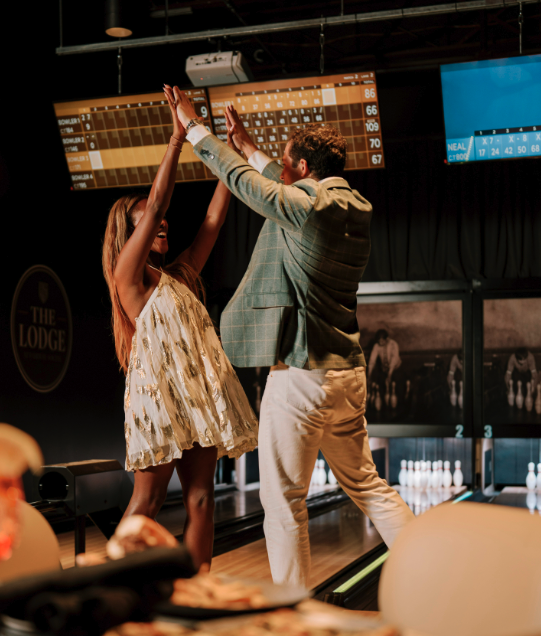
Roaring Social in Alpharetta, Georgia, is an adult nightlife destination where live music, dancing, cocktails, and eight boutique bowling lanes have created a successful mix. Fairway Social Birmingham serves a broader audience and includes The Lodge, an intimate entertainment space within the venue.
When CSV began programming The Lodge, adapting Roaring Social’s successful combination of music and socializing seemed like a logical move.
Birmingham guests had other ideas.
Rather than responding to the music and dancing that appealed to Roaring Social customers in Alpharetta, Birmingham guests were more drawn to sporting-event watch parties. CSV took the cue and shifted The Lodge’s programming to reflect that interest.
The right experience isn’t always the one originally planned. Sometimes the market points you in a different direction.
A PROVEN IDEA MEETS A NEW MARKET
CSV operates social entertainment concepts across Georgia, Alabama, and Colorado. Roaring Social caters exclusively to guests 21 and older, while Fairway Social draws families and groups for simulator games, dining, and sports viewing.
Within Fairway Social, Birmingham is The Lodge, a vintage-inspired speakeasy and clubhouse with duckpin bowling, craft cocktails, and live entertainment. Because music and dancing had worked so well at Roaring Social, CSV expected similar programming to draw guests into The Lodge.
Guests showed stronger interest in sporting events and watch parties. CSV President and CEO Neal Freeman said the company relies heavily on data and guest feedback to understand demand rather than on a single metric. In Birmingham, those signals led CSV to emphasize sports-driven programming while keeping live music in the mix.
“Not every market will accept your concept as it was originally built,” Freeman said. “Staying nimble and being willing to pivot is key to success in today’s market.”
WRONG ASSET OR WRONG JOB?
The Lodge already had a stage and projector. When guests showed more interest in sporting events, CSV found another use for assets already in place. The reason to visit shifted from seeing a band to watching a big game.
An asset can look weak when judged against the wrong expectation. A party room that struggles with birthday parties may work well for business meetings. Background screens may become the centerpiece of a watch party. A quiet bar may come alive around trivia or local sports.
The first question doesn’t always have to be, “What should replace it?” A better question may be, “What else could this space do?” Changing the programming, audience, or use of an existing space offers a way to see what else it can do before making a much more expensive decision.
EVERY EXPERIENCE HAS A JOB
Changing how something is used can also change how its value is measured.
At Roaring Social, live music is the primary draw, while Freeman describes bowling as a “strong supporting experience.” The lanes give groups another way to interact, help break the ice during corporate events, and reinforce the venue’s 1920s atmosphere.
“The food and beverage is the biggest driver for success, but the entertainment is usually what draws in our guests, and keeps them staying longer, and returning,” Freeman said.
That makes direct revenue only one part of the picture. One experience may bring guests through the door. Another may support food and beverage sales, extend the visit, or give customers another reason to return.
Bowling may bring in a group, while food and beverage captures more spending. An arcade may keep children engaged, a bar may extend the evening, and a party room may drive bookings. Each contributes differently to the overall visit.
FOLLOW THE PATTERN
Changing direction doesn’t mean reacting every time something has a bad night.
A slow week, one disappointing event, or a handful of comments may not tell you much. What mattered in Birmingham was the response CSV continued to see from guests.
“We try a lot of different things to see what guests want,” Freeman said, adding that those preferences change over time.
CSV looks at what guests are interested in, which experiences are driving demand, and broader trends or outside events that may influence guest behavior and programming. One signal may not mean much on its own. When several begin pointing in the same direction, a pattern starts to emerge.
FAMILIAR CAN FEEL NEW
Following the guest's response doesn’t always lead to something entirely new. Freeman sees a common misconception in the constant push for what’s next. “I think a common misconception is that guests are always looking for something new,” he said.
CSV still introduces special events and new experiences, but Freeman said the bigger opportunity is creating experiences guests want to return to and relive. Roaring Social does that with comedy shows and murder mystery nights. At Fairway Social, sporting events, including World Cup games, create their own occasions to visit. The attraction hasn’t changed. What changes is the experience built around it.
A different event, time, or way of using a space can give guests a fresh reason to come back.
WHEN THE PLAN CHANGES
CSV went into Birmingham with a concept that had already worked elsewhere. When guests responded differently, the company didn’t immediately abandon the space or the assets already in it. It changed the programming and watched the response.
The original idea wasn’t necessarily wrong. It simply wasn’t the version Birmingham guests responded to most. And sometimes the best ideas for what comes next are already walking through the door.
BEFORE YOU PULL THE PLUG
Before replacing an underperforming attraction, room, or program, consider:
Is it being judged only by its direct revenue?
Does it perform better for certain groups, events, or dayparts?
Are guests already using it differently than expected?
Could programming give it a clearer purpose?
What could be tested before investing in a replacement?