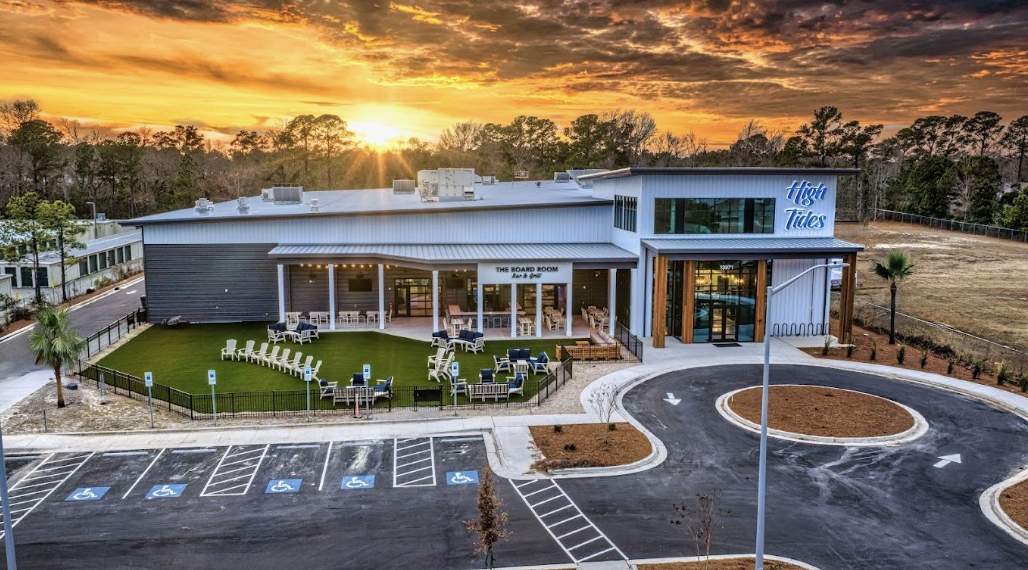

When Demand Outpaced the Plan
On the morning High Tides and Good Vibes opened its doors, new operator Eric Shirley wasn’t exactly easing into a smooth launch. The center didn’t have a liquor license. Final permits were still pending. The team was operating on a temporary Certificate of Occupancy, and the kitchen staff had two days of training under their belts.
“It was one of those moments where you think, ‘Are we really doing this today?’” Shirley says. By 3 p.m., approvals came through and the doors opened to the public.
The next day, the coastal North Carolina center pulled in $60,000.
A Concept That Hit at the Right Time
High Tides and Good Vibes filled a gap in the local community with a full-scale entertainment center that blends bowling, arcade, redemption, and social experiences. Before opening, locals were driving 45 minutes or more for a night out, something Shirley experienced firsthand.
Despite having no background in entertainment or hospitality, Shirley and his partners —Frankie Williams, Brian Mallim, and Kranti Ponnam — moved forward with the project, leaning on experienced partners along the way, an approach that proved critical once the doors opened.
Building Buzz Before the Build Was Done
Months before opening, they leaned heavily into social media with behind-the-scenes content documenting the journey. “We started sharing renderings, updates, and clips to give people a front-row seat to what we were building.” One early video announcing the concept racked up more than 1.6 million views. By the time of the opening, they had built a following of more than 30,000 without spending a dollar on paid ads.
When Success Becomes the Problem
The first few weeks were relentless. Guests poured in. Bowling lanes filled within minutes of opening, sometimes with three-hour wait times. Transactions climbed into the thousands each day. “We were there from 7 a.m. to 2 a.m. for 30 straight days,” Shirley says.
And behind the scenes, cracks started to show. “We made a lot of mistakes early on,” he admits. “We just weren’t prepared for that kind of volume.” That’s when Shirley says having the right partners in place was key. “We needed guidance from people who’ve seen it before.”
One of those voices was industry veteran Jerry Merola of Amusement Entertainment Management, who worked with the team from the beginning, through feasibility and planning. “Jerry helped us make sense of what we were seeing,” Shirley says. “He helped us understand what was normal and what wasn’t.”
As the pace intensified, that outside perspective became even more valuable. “You realize pretty quickly that you don’t need vendors, you need partners,” he adds. That lesson hit especially hard in one area they hadn’t anticipated: redemption.
When the Prize Counter Couldn’t Keep Up
“By the end of the first night, every grabber machine was empty,” Shirley says. “And the redemption store was wiped out.” It wasn’t a one-time issue. It kept happening. “We’d restock, and by the end of the next day, it was gone again.”
The problem wasn’t just inventory. It was understanding the system behind it. “We didn’t even realize at first that our payout was off,” he says. “We were running around 12% and industry standard is closer to 25%. That’s when Shirley called their redemption rep. “I said, ‘We’re out of product, our machines are empty. We need help.’”
That call to their merchandise partner, Redemption Plus, marked a turning point. “They didn’t just send us more product,” he says. “They showed up.”
An inventory specialist spent three days on-site training the team and their local rep made multiple visits to ensure processes were sticking. “They helped us establish realistic par levels, set up inventory systems so we actually understood how everything should function,” Shirley says. “They were here five different times in those first couple months,” he says. “Within six to eight weeks, we went from chaos to a system,” Shirley says.
“Now that the team has the right setup and understands how important a strong redemption experience is for both guests and the business, they’ve really taken ownership of the department.”
Dialing In Food & Beverage
Food and beverage was another early adjustment. Costs got out of control fast, and it was clear something had to change. “Again, we didn’t have the right structure in place,” Shirley says. They brought in a new chef with compensation tied directly to food cost performance. “That accountability made a big difference right away,” he adds.
Early Wins and Surprises
Despite the early challenges, the center quickly found its rhythm. “We thought one attraction would dominate,” Shirley says. “But it’s actually been pretty evenly spread.” The arcade leads, with bowling right behind, and together they make up nearly half of attraction revenue.
The arcade has been a big win. If things keep trending the way they are, Shirley says they expect to have the games paid off within six months of opening.
Another surprise? How much branding actually matters. “We positioned ourselves as a lifestyle brand right from the start,” he says. That approach has carried through in branded merchandise, which has become a solid revenue driver. “People love the logos and the vibe. It’s become part of the experience.”
They’ve leaned into it beyond the building, too. From supporting local surfers to seeing their stickers show up on boards around town, the brand has taken on a life of its own.
Culture Makes the Difference
Staffing was a big focus early on. “We were very lucky that our initial hiring for hourly employees attracted 350 applicants,” Shirley says, fueled in part by social media buzz. From the start, they wanted to create a positive place to work, so building a strong culture was a priority.
“We made a decision early on that nothing was beneath the management team,” Shirley says. “We’re bussing tables, making drinks, talking to guests. If your team sees that, they follow it.”
He recalls a moment when a guest, a local doctor, reached out after her visit. As she was leaving late one night, one of the center’s high school employees walked her to her car and asked about her experience. “She didn’t expect that,” Shirley says. “But it meant enough for her to email me about it.”
Finding the Joy in the Chaos
Today, the operation is far more structured. Systems are in place. The team is dialed in. And the early chaos has given way to consistency. But Shirley hasn’t lost sight of what drew him to the business in the first place.
“At the end of the day, we’re in the business of creating fun,” he says. “People come in, maybe they had a bad day, and for a couple hours, they forget about it. That’s a privilege.”
After all the long days, the learning curves and the unexpected challenges, one thing is clear. “The joy is in the journey,” Shirley says. “It’s hard, but I wake up every day and I love it. We own a lot of other businesses, but this is the one I wake up excited about every day.”