
How a Nebraska Center Keeps Leagues Full
When was the last time your lanes were packed with league bowlers?
In today’s climate, a full house of organized play night after night is increasingly rare. Unless you’re at Maplewood Lanes in Omaha, Nebraska.
At this 36-lane center on the city’s west side, leagues don’t just survive, they dominate the schedule. More than 25 organized groups fill the calendar for men, women, youth, high schoolers, seniors, and every combination in between. Most evenings at 6:30 p.m., every lane is spoken for. Many leagues run 30 weeks or more, stretching from before Labor Day to Easter. And in a throwback that would make purists smile, nine leagues still field five-player teams.
This didn’t happen by accident. It’s the result of deliberate leadership, relentless personal contact, and a philosophy that empty lanes are simply not an option.
Filling Lanes Is the Mission
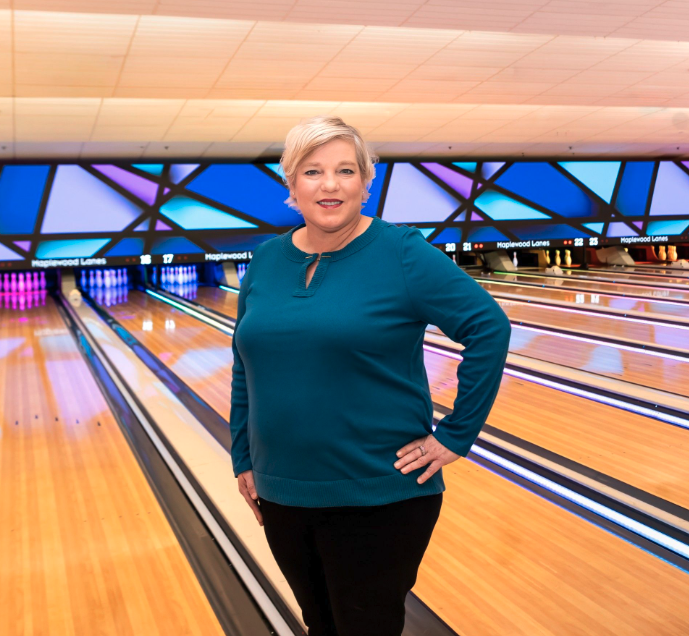
Jeanne Belitz Jr., Maplewood’s general manager for the past 17 years, grew up in the business. She represents the third generation of her family operating centers in Omaha, dating back to the 1950s. Before returning to Maplewood in 2008, she spent years in hospitality management, an experience that sharpened her instincts about occupancy and customer service.
In the hotel world, she learned a simple truth: empty rooms don’t generate revenue. The same logic applies to lanes. Her daily mindset is straightforward: fill them.
That clarity drives everything at Maplewood.
Belitz personally handles league coordination. Not most of it. Not parts of it. All of it. She attends every league meeting. She makes sure she’s visible during the first two weeks of every season to smooth out issues before they snowball. And she hands out her personal cell phone number freely.
Her approach resembles a cruise director more than a distant manager. League bowlers know exactly who to call, and they do. That accessibility isn’t limited to in-person interactions. Maplewood reinforces it with communication systems that keep leagues connected beyond the building.
Connection as a Competitive Edge
Social media at Maplewood is much more than just promoting specials. It’s a communication engine.
Belitz created private Facebook groups for each league, using them to share announcements, celebrate milestones, promote tournaments, and keep everyone informed during weather disruptions. The groups allow bowlers to interact with one another, reinforcing the social glue that keeps leagues strong.
Building that digital network took real work. Personally connecting with customers online and integrating them into digital groups was a significant undertaking. But the payoff has been speed and accessibility. What once required long evenings on a landline can now be handled in minutes through text or social platforms.
Belitz jokes that she carries her league book everywhere. If a bowler calls while she’s waiting in a parking lot, she can answer questions on the spot. League coordination, in her view, no longer has to be confined to an office desk.
To strengthen that effort, Maplewood works with a former general manager who now serves as an outside social media and marketing consultant. Weekly emails go out. Open roster spots are promoted quickly and specifically. If a Thursday mixed league needs one bowler between ages 40 and 55, the message is clear and often filled within a day. Belitz believes that fast communication prevents small gaps from becoming big problems.
Formats That Keep Lanes Full
Strong communication keeps leagues informed. Smart formats keep them growing. Maplewood’s league lineup includes some formats that operators everywhere would love to replicate.
Parent-child leagues remain a cornerstone. Maplewood was one of the first centers in Omaha to offer adult-youth leagues decades ago, and today they’re seeing fourth-generation bowlers. One team fittingly calls itself “The Three Gens,” featuring a grandmother, her daughter who grew up in Maplewood’s youth program, and now her grandchildren.
Youth leagues remain strong as well. To maximize revenue and flexibility, Maplewood adopted a pre-pay option and structured pre- and post-bowling opportunities for those who can’t attend regularly. That flexibility helps retain families with busy schedules.
Most leagues are mixed, but Maplewood simplified team rules. Instead of requiring strict male-female combinations, they shifted to a “crazy mixed” format of any combination of genders allowed. That change made roster management easier and eliminated the scramble to find a specific replacement.
Only one league still requires at least one member of the opposite sex. The rest prioritize flexibility over tradition.
There’s room for competitive purity too. The 800 Classic on Thursdays is exclusively men, while the Classy Ladies take over Tuesday nights. Two other men’s leagues also include high-level women competitors.
The common thread? Structure that works for participants, not against them.
Scheduling Around Real Life
And at Maplewood, structure doesn’t stop with team rules, it extends to the clock. Unlike many centers that open late afternoon, Maplewood starts at 9 a.m. Special needs groups occupy much of the daytime schedule, generating revenue in hours that often sit idle elsewhere.
To bridge the gap before evening leagues, Maplewood introduced Cocktail Hour leagues that consist of three-person teams starting around 4:30 p.m. The concept took off during COVID and never looked back. What once filled 18 lanes now fills 30. These leagues appeal especially to retirees and those who prefer not to drive at night. They still want competition and camaraderie, just on a schedule that fits their lifestyle.
After-school leagues fill Tuesday afternoons. Sunday afternoons feature the Adult/Youth Family Roller league, drawing around 30 teams. A recently introduced early bird Sunday special, $9.99 for 90 minutes, sold out its first two weeks.
Every time slot has a purpose.
The 30- and 40-Something Challenge
Even with a packed schedule, some demographics require extra attention. One demographic that remains challenging is attracting bowlers in their 30s and 40s. Belitz believes that retention in that age group requires reinforcing value and social ability. She frequently asks prospective league members a simple question: Would you see these same friends every week if you weren’t bowling?
The answer is usually no.
That realization reframes league bowling as something bigger than scores. It’s built-in social time. It’s accountability. It’s connection in a world where busy schedules often erode regular interaction.
Purposeful Profit Centers
While leagues drive the core business, Maplewood has also found smart ways to strengthen revenue around the edges. Maplewood has made selective upgrades without compromising its league-first focus. A small game room was added, generating steady revenue with minimal labor. The prize mix includes adult merchandise, aligning with the league-heavy demographic.
An online reservation system improved the guest experience during limited open play windows. Fundraisers help fill weekend gaps. Free daytime coaching builds goodwill and strengthens skill development.
Advice from the Front Lines
After years of refining her league building model, Belitz has clear opinions on what works and what doesn’t; she has developed a definitive playbook for building strong, sustainable leagues.
Clear up misconceptions. Many people assume leagues are only for highly skilled players. Belitz reframes the conversation explaining “Skill level isn’t the requirement; personality and fun are. Once bowlers understand how handicap levels the field, hesitation disappears.”
Promote early. Maplewood often sells out summer leagues by February. Planning five months ahead isn’t aggressive there; it’s routine.
Leadership involvement matters. Belitz believes league success starts at the top. In her view, ownership should stay closely connected to coordination rather than handing it off entirely.
Recognition — and Community
Maplewood’s efforts have earned them five consecutive Omaha Choice Awards from the Omaha World-Herald and earned repeated recognition in Omaha Magazine’s Best of Omaha competition.
But awards aren’t what define success here. What stands out more is the multi-generational community. Bowlers gather for baby showers, birthdays, luncheons, and milestone celebrations. League night extends beyond frames and score sheets. It’s a social anchor.
In an era when many operators are searching for the next attraction, Maplewood doubled down on connection, consistency, and personal accountability.
The result? Packed houses. Loyal customers. And proof that leagues, when nurtured properly, are far from a relic of the past.
They’re a strategy.